U.S.-based manufacturing. No direct China sourcing – GUARANTEED!

Peptide Portfolio

CJC-1295/Ipamorelin

BPC-157/TB-500

GHK-Cu

Retatrutide

PT-141

Reconstitution Solution

GROWTH & REPAIR, IMMUNE & INFLAMMATORY, HAIR & AESTHETICS

PROTOCOL (1)

Retatrutide, identified by its compound code LY-3437943, is an investigational peptide studied in research environments for its unique triple receptor interaction profile. Its structure and mechanism of action make it of interest in studies focused on hormonal receptor pathways and regulatory peptides. As a research chemical, it is commonly used in preclinical studies examining metabolic signaling and energy regulation models in controlled lab conditions.

$289.00 / month

FREE Shipping on orders over $200

MOLECULAR FORMULA:

C212H350N56O78S

Quantity Discounts Available

attention_blue.png

Research Use Disclaimer

The peptide protocols referenced on this website are offered exclusively within the context of an Institutional Review Board (IRB)–approved research study. These protocols are investigational in nature and are not approved by the U.S. Food and Drug Administration (FDA) for the diagnosis, treatment, cure, or prevention of any disease unless otherwise specifically indicated. Participation in any research protocol is voluntary and subject to eligibility review, informed consent, and oversight in accordance with established research and ethical guidelines. Information provided on this website is intended for educational purposes only and should not be interpreted as medical advice or as a substitute for consultation with a qualified healthcare professional. Peptides discussed herein are utilized solely within structured research protocols designed to evaluate safety, tolerability, and/or physiologic response. Individual results may vary, and no guarantees of outcomes are made or implied. Services provided in connection with research participation may include telehealth-supported screening, study coordination, and ongoing research-related monitoring. Telehealth interactions are conducted for research facilitation purposes and do not replace comprehensive medical care or establish a traditional physician–patient relationship outside the defined scope of the study. If you have questions about your personal health, medical conditions, or current treatments, please consult your licensed healthcare provider.

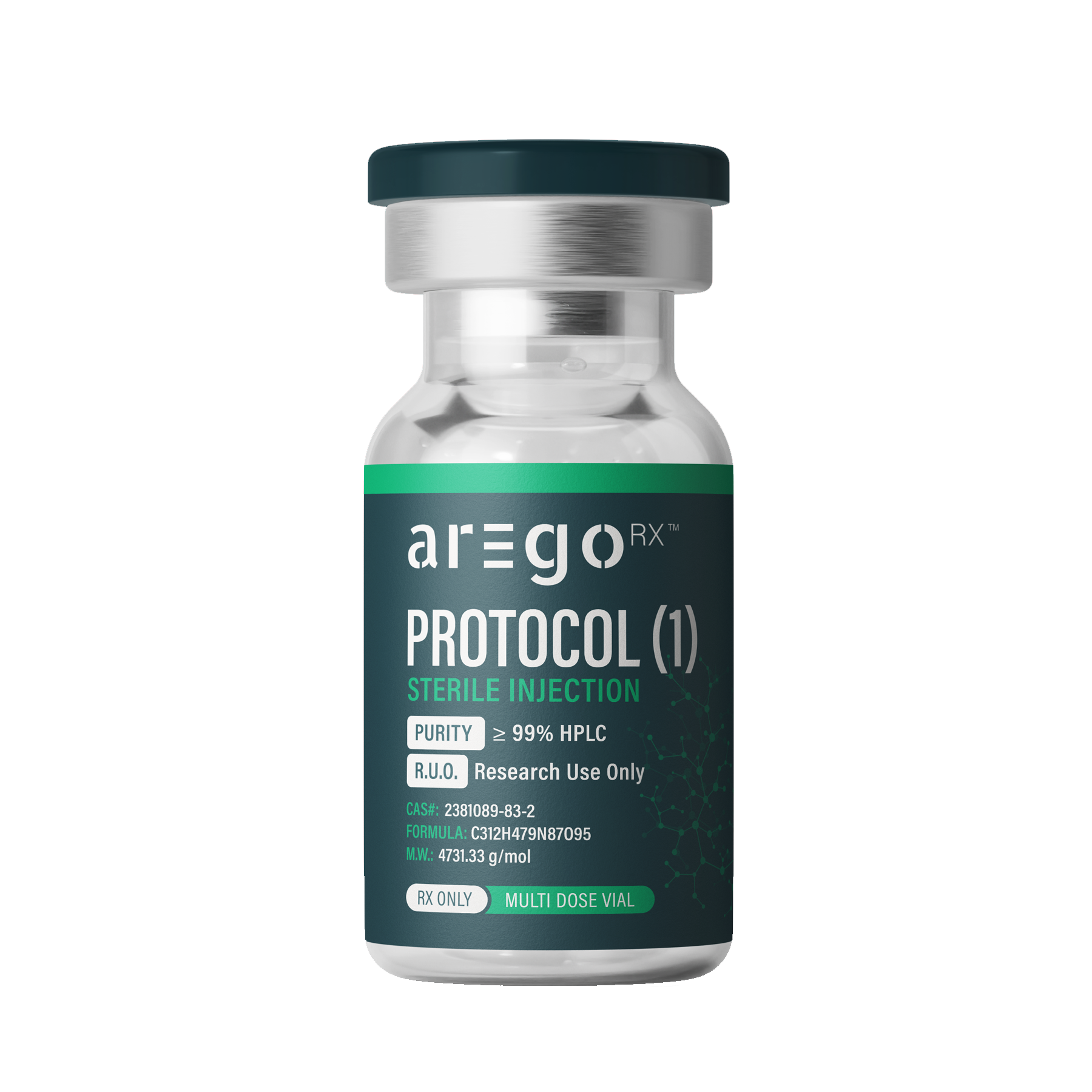
Protocol (1) – Retatrutide (GLP-3)

Retatrutide is a next-generation triple-receptor agonist designed to engage the body’s GLP-1, GIP, and glucagon pathways – key regulators of metabolic function, appetite signaling, and glucose balance. By targeting these complementary systems it can support comprehensive metabolic optimization. Dosing is initiated conservatively and can be increased over time through a stepwise approach based on individual goals, response, and overall tolerance, allowing for a personalized protocol aligned with participant’s unique physiology.

Chemical Info

CAS Number 2381089-83-2  
PubChem CID 171390338  
Molecular Weight 4731.33 g/mol  
Molecular Formula C312H479N87O95  
Synonyms Triple GLP-1, GLP3, RETA, LY3437943
Purity ≥ 99% HPLC

Storage

Temperature
Store in lyophilized form at -20°C to maintain compound stability.
No Sunlight
Store protected from direct light exposure to reduce degradation.
No Moisture
Keep totally dry and avoid moisture exposure prior to reconstitution.
Vial
Keep vial tightly sealed when not in use to preserve integrity.

The GHRH/GHRP Synergistic Axis


The primary focus of this blend is the investigation of ‘Dual-Receptor Synergism.’ In pituitary research, it has been observed that GHRH and GHRP work through different intracellular pathways (cAMP and PLC/IP3, respectively). When administered together, they have been shown to produce a GH release that is significantly greater than the sum of the two parts. Researchers use this blend to determine the optimal ratios required to maximize this ‘Double Pulse’ while avoiding receptor desensitization.

Metabolic Signaling & Body Composition


In metabolic studies, this complex is utilized to observe the secondary effects of elevated GH on the IGF-1 axis. By stimulating the liver to produce IGF-1 in a pulsatile manner, researchers can monitor changes in nitrogen retention, protein synthesis, and collagen deposition. This research is vital for understanding how specific secretagogue stacks can influence the structural restoration of skeletal muscle and connective tissue in animal models of atrophy or injury.

YOUR CART
  • No products in the cart.